
A Message For Holy Week: Christian Love is Simple, Not Easy
By O. Henry Swartzentruber
Before I get into the core message this week, I want to offer a blessing for Joseph L. Graber and his new wife, Mabel (Troyer) Graber. The Grabers were married at the Shiloh building a week ago, just south of Odon. May God richly bless your marriage, your family, and your new home. Our society's building block is marriage and family—not politics, sports, or power. Let's collectively pray for Joe and Mabel, and all families this week. Stay strong in the daily storms.
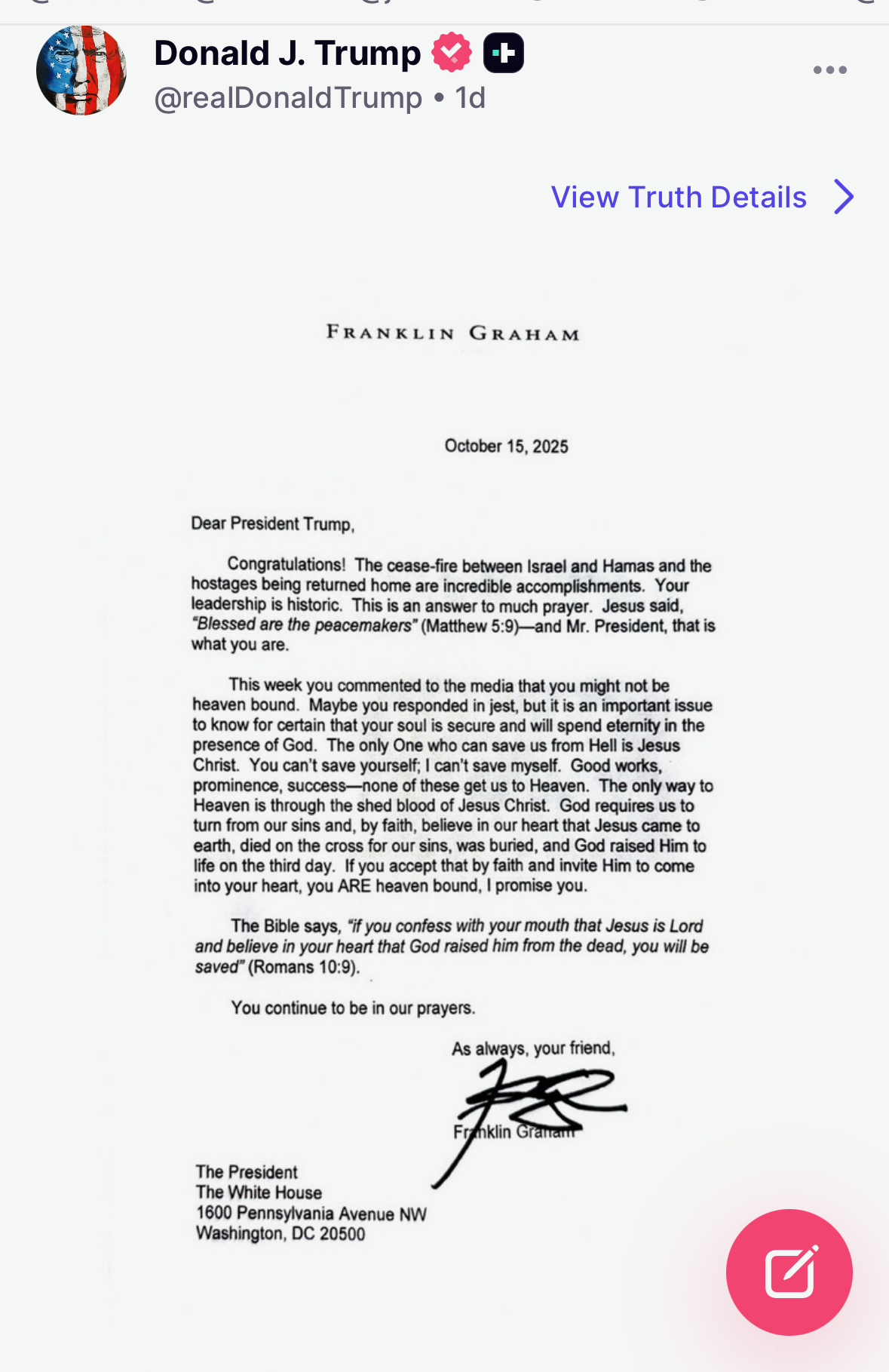
This week I was shocked by the social media account of President Donald J. Trump. He posted a 6-month-old Franklin Graham letter on March 29th at 9:41 a.m., without comment. I do not have social media, so I had to get the actual post from my wonderful mother. It was not your typical Trump Tweet. Instead, it was a message of peacemaking and repentance and turning to Jesus Christ—a conversion of heart and mind. My favorite professor at Indiana Wesleyan University used to say "everyone is on a journey" of sorts. Wow, my friends. The message to start Holy Week was rare for "Truth Social" from Mr. Trump. It is rare to find actual Truth on a platform called "Truth Social," but there it was on Palm Sunday. Social media is mostly a morass of fighting, scandal, and snark.
Therefore, I must admit: I loved the Franklin Graham letter to the most powerful person in the world. I further loved that Trump (or his team) posted it several months later. It is a universal Christian message ripe for Holy Week. "For all have sinned and fallen short of the glory of God..." (Romans 3:23). But, Christian love and repentance "can cover a multitude of sins..." (1 Peter 4:8).
Pres. Trump's post captures a central Christian idea: salvation comes through Jesus Christ by grace, not human effort. Salvation does not come by running for public office. Many salvific claims can be cheap and easily changed into something less demanding than the Gospel intends. The cynic says Mr. Trump is playing his audience. Perhaps. But a message of Christian love transcends cynicism.
Pastor Graham questions Mr. Trump's offhanded quip about not being headed to heaven and then gives him free advice: Mr. Trump, if you want to get to heaven, Christ can give you that. It is a free gift. You must cooperate with His grace, accept and internalize it, and allow your life to be transformed. It is not a cheap grace or political ploy.
Christian tradition has long insisted that authentic faith is never isolated- not a "naked faith." A true faith's hallmark is love that is "willing the good of the other person.” It is not solely our assent to a rational proposition (like 2 + 2 = 4) or a single moment of decision, but a lived reality—a life expressed in repentance, conversion, a changed life. The New Testament’s call to “repent and believe” directs us to the Greek word “metanoia”: an ongoing reorientation of the whole person to God. I had heard this word, and my daughter is currently taking Greek, so I asked her what metanoia meant— she didn't know (yet), but said Greek is interesting because the words have varied meanings that do not always fit with our English-speaking, modern understanding.
To repent and change is difficult, as we learn in the Gospel from the rich, young ruler. That decision has difficult, practical consequences. Salvation calls for conversion, perseverance, humility, and an ongoing reliance on God's mercy in our lives. The reduction of salvation to a single act or "flu shot mentality" risks missing the deeper Biblical message of our faith "working out" through Christian Love (Philippians 2).
Here, the witness of humble Teresa of Calcutta reminds us not about political power, but about love: “If you want to change the world, go home and love your family.”
You don't need to run for political office, the PTO, for judge, or for President. Go home and love. It is simple, but not easy.
In classical Christian thought, love is not sentimentality or mushiness—but “willing the good of the other” person. This love is demanding, concrete, and difficult.
The Christian expectation thus resists both moralism ("being good") and minimalism ("all you have to do is..."). Yes, even the demons believe. My understanding affirms God’s grace as the source of salvation while insisting grace will transform us and bear fruit—in repentance, metanoia, acts of self-giving love. World-changing love begins close to home and extends out. This week, be reminded that Christian love has changed, and can continue to change the world.